Rainbow Trace
Automated temporal color projections for comparing bacterial movement in microscopy videos.
Research need
The original Fiji macro required repeated manual steps and parameter adjustments to generate rainbow projections. Besides taking time, differences in processing settings between groups could reduce the comparability of the resulting images. I adapted this workflow into Python to automate video processing and apply consistent settings within an experiment.
Workflow and output
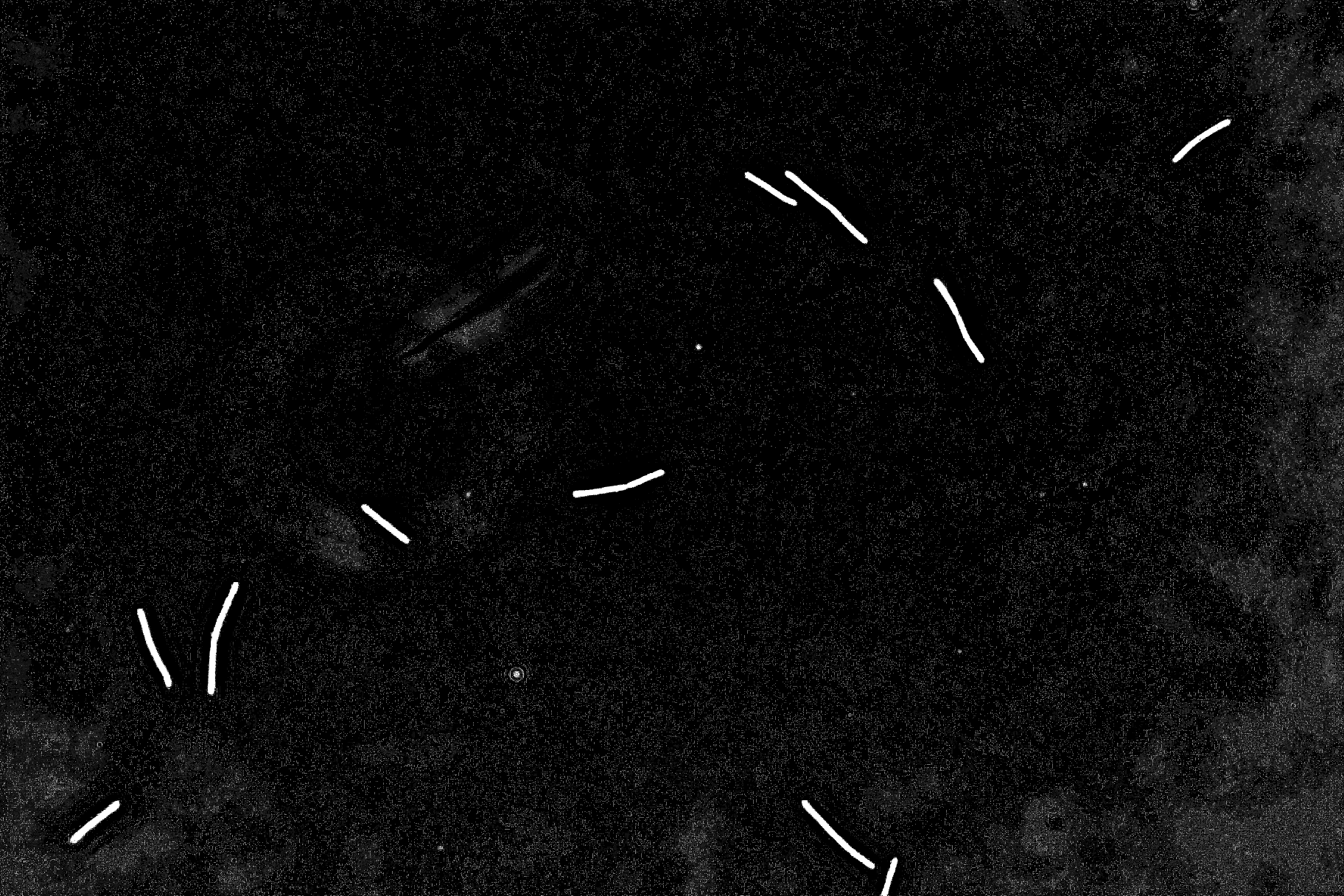
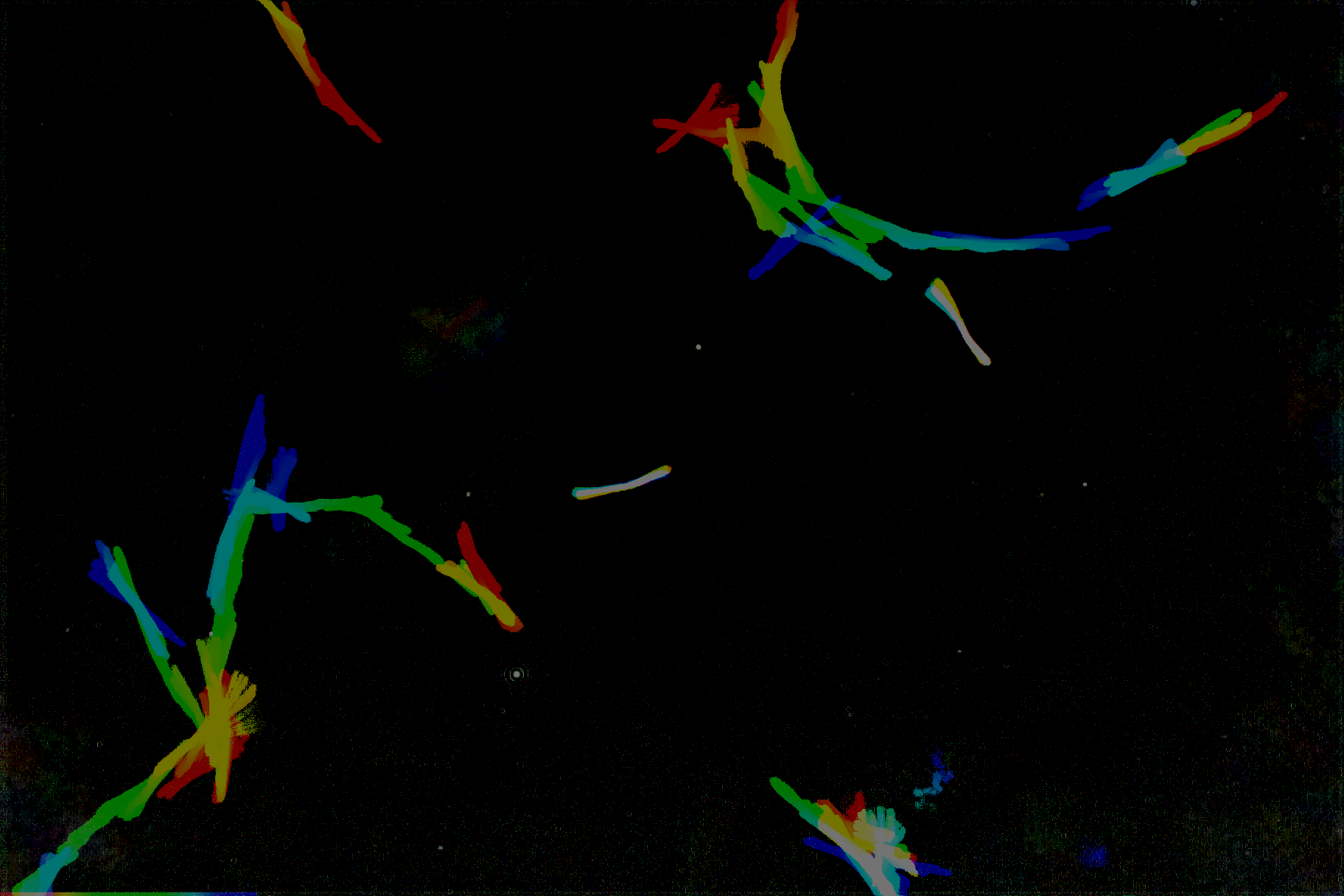
Rainbow Trace assigns colors to successive time points and combines them into a single temporal color projection, making the temporal pattern and spatial extent of bacterial movement easier to inspect. Batch processing and retained outputs support comparison and review of microscopy observations (Fig. 1).
A. Preprocessed frame
B. Temporal color projection
Current status
The workflow has produced usable visualization outputs from research videos. Temporal color projections support visual comparison of movement patterns; they do not assign cell identities or measure tracking accuracy. Dataset-wide throughput and runtime comparisons remain to be documented.